Opposition Conservative leader Iain Duncan Smith asked if Blair had promised President George W. Bush during a weekend visit to the U.S. leader's Texas ranch that he would have British support for an attack on Iraq.
"The time for military action has not yet arisen," Blair replied. "However, there is no doubt at all that the development of weapons of mass destruction by Saddam Hussein poses a severe threat not just to the region but to the wider world."
The issue had become a contentious one over the weekend in Blair's own Labour Party, with many backbench MPs opposing military action and saying Blair had gone too far in supporting Bush.
About 150 MPs, mostly from Labour, have signed a motion expressing "deep unease" about an attack on Iraq.
Bush declared last week that he had decided Saddam must go but would not elaborate on how that might be achieved. Pressed on a change of regime in Baghdad, Blair signalled the same ambition.
"There is no doubt whatever that the world would be a better place without Saddam," he said. "However, the method of doing this, that is ... something that is open to consultation and deliberation."
On Sunday, Blair had some of his toughest words so far for Saddam Hussein, saying the Iraqi leader must allow U.N. weapons inspectors without conditions.
Blair also addressed the Middle East issue in Parliament on Wednesday, saying that Israel should withdraw from the occupied territories and "do so now."
"We also condemn without reservation the terrorist attacks on Israeli citizens," he said, adding that the Palestinian leadership had to act against the terrorists.
"Both sides know what needs to be done and they should get on and do it -- now," he said. "The time for violence is over and the time to get the peace process going is overdue."
Earlier on Wednesday on Parliament's return after the Easter break, Blair addressed the Parliamentary Labour Party (PLP).
MP Jeremy Corbyn, a long-standing critic of the government's approach to Iraq, said he had not been reassured by Blair's comments.
"I wasn't persuaded. On Iraq, he said that no decisions had been taken, but Iraq had not complied with U.N. resolutions.
"A large number of people were not called to speak. Several wanted to point out that Iraq is not now directly threatening his neighbours, and that there is no evidence of a new generation of chemical and biological weapons."
Blair also spelled out his views on Iraq to an Arab newspaper, writing: "I know some fear precipitate action.
"They needn't. We will proceed, as we did after September 11, in a calm, measured, sensible but firm way."
But, he said, not allowing weapons inspectors in to do their job was "not an option."
"The regime of Saddam is detestable. It is brutal and repressive, political opponents are routinely tortured and executed.
"It is a regime without a qualm in sacrificing the lives of its citizens to preserve itself, or starting wars with neighbouring states and it has used chemical weapons against its own people."
Blair said that "the moment for decision on how to act is not yet with us."
But he said that "to allow weapons of mass destruction to be developed by a state like Iraq without let or hindrance would be grossly to ignore the lessons of September 11 and we will not do it."


Ultimi Articoli
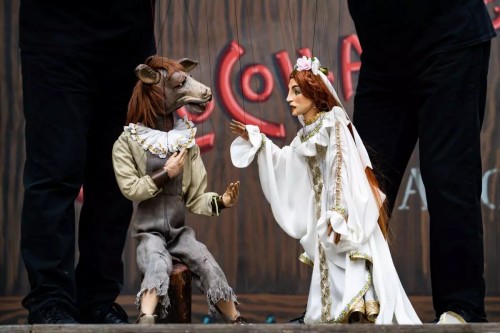
Milano Teatro City, dal 15 al 18 ottobre la prima edizione della maratona teatrale in città

TEATRO MANZONI, LA NUOVA STAGIONE ACCENDE MILANO: OLTRE 220 SIPARI TRA GRANDI NOMI, COMICITÀ, MUSICA E FAMIGLIE

Forum del giornalismo musicale, undicesima edizione a Faenza con Lamante e Federico Guglielmi

Milano Fashion Week donna, al via dal 22 settembre: 203 appuntamenti tra sfilate, mostre ed eventi

Monferr’Autore Festival, tre appuntamenti ad Alessandria e Castelletto Monferrato

Bambina di due anni deceduta al Buzzi di Milano: istituita una commissione di verifica

Monferr'Autore, piazza Mazzini canta Guccini: in 300. Al contest vincono i Bailenga
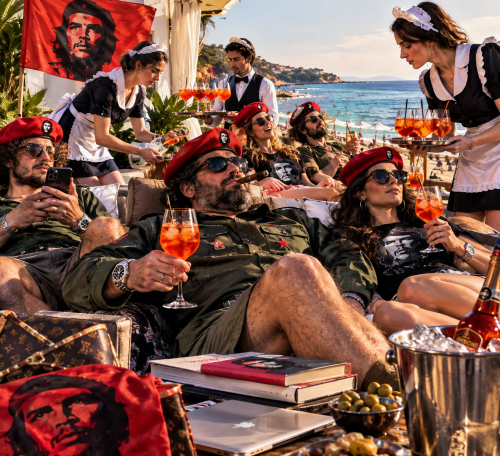
LA RIVOLUZIONE È SERVITA!

Carpooling a Milano: sosta gratuita in cinque parcheggi ATM con l’app BePooler