Background: Mood disorders are a major public health problem in the United States as well as globally. Less information exists however, about the health burden resulting from subsyndromal levels of depressive symptomatology, such as feeling sad, blue or depressed, among the general U.S. population.
Methods: As part of an optional Quality of Life survey module added to the U.S.
Behavioral Risk Factor Surveillance System, between 1995-2000 a total of 166,564 BRFSS respondents answered the question, "During the past 30 days, for about how many days have you felt sad, blue, or depressed?" Means and 95% confidence intervals for sad, blue, depressed days (SBDD) and other health-related quality of life (HRQOL) measures were calculated using SUDAAN to account for the BRFSS's complex sample survey design.
Results: Respondents reported a mean of 3.0 (95% CI = 2.9-3.1) SBDD in the previous 30 days. Women (M = 3.5, 95% CI = 3.4-3.6) reported a higher number of SBDD than did men (M = 2.4, 95% CI = 2.2-2.5). Young adults aged 18-24 years reported the highest number of SBDD, whereas older adults aged 60-84 reported the fewest number.
The gap in mean SBDD between men and women decreased with increasing age.
SBDD was associated with an increased prevalence of behaviors risky to health, extremes of body mass index, less access to health care, and worse self-rated health status.
Mean SBDD increased with progressively higher levels of physically unhealthy days, mentally unhealthy days, unhealthy days, activity limitation days, anxiety days, pain days, and sleepless days.
Conclusion: Use of this measure of sad, blue or depressed days along with other valid mental health measures and community indicators can help to assess the burden of mental distress among the U.S. population, identify subgroups with unmet mental health needs, inform the development of targeted interventions, and monitor changes in population levels of mental distress over time.
MORE: http://www.hqlo.com/content/2/1/40" target="page">FULL

Ultimi Articoli
Ilze Brands Kehris nominata rappresentante speciale dell’UE per i diritti umani

Milano, il progetto STEP per il lavoro di 250 giovani: presentazione il 20 ottobre

Cucina italiana ad Atene, la Lombardia partecipa con quindici consorzi

Youth and Future a Palazzo Reale: le parole dei giovani diventano opere d’arte

Fibra ottica in provincia di Como: 145 comuni nel Piano Bul, oltre 144.000 immobili attivabili
Leone, il neonato ritrovato a Cinisello Balsamo respira senza supporto
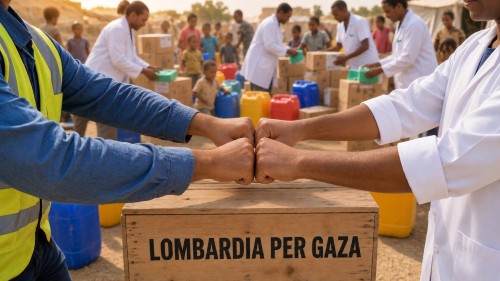
Gaza, dalla Lombardia altri 150mila euro per acqua e assistenza agli sfollati

Milano premia i suoi protagonisti: a Palazzo Marino otto “Volti della Metropoli” che raccontano il futuro della città

Premio Volti della Metropoli: a Palazzo Marino i riconoscimenti alla VI edizione